
Audio Visual for Conferences: Equipment and Technical Support for Large Events
Large conferences require more than a stage, a microphone, and a projector. As attendee counts increase and schedules become more complex, the audio visual system becomes an essential part of how information is delivered, how speakers connect with the audience, and how smoothly the event operates from one session to the next.
Professional audio visual for conferences brings together sound, video, lighting, staging, presentation technology, and technical staffing into one coordinated production plan. Whether you are organizing a corporate conference, annual meeting, convention, leadership summit, association event, or multi-day business gathering, the right AV setup can help create a polished experience for both presenters and attendees.
FDC Event Technology provides conference AV equipment and technical support for events of varying sizes and complexity, from individual meeting rooms to large general sessions and multi-room conference environments.
Start Conference AV Planning Early
One of the most important parts of conference production is identifying technical requirements early in the planning process.
Before equipment is selected, the AV team should understand the structure of the event, including:
Number of attendees
Venue size and layout
General session requirements
Number of breakout rooms
Presentation formats
Speaker schedules
Panel discussions
Video playback
Remote presenters
Livestreaming requirements
Recording needs
Stage design
Lighting requirements
Event branding
These details influence nearly every technical decision.
A conference with 200 attendees in one ballroom may require a relatively straightforward audio and projection system. A multi-day conference with thousands of attendees, multiple breakout rooms, livestreaming, LED video walls, and concurrent presentations requires a much more detailed production plan.
Early planning also gives the AV team time to coordinate with the venue regarding power, rigging, internet access, loading schedules, room access, and other logistical requirements.
Professional Audio Systems for Conferences
Clear audio is one of the most important components of conference AV.
Attendees need to hear keynote speakers, panelists, videos, announcements, and audience questions clearly regardless of where they are seated. Poor audio can quickly become distracting and make even a well-planned event feel unprofessional.
Professional conference sound systems may include:
Main speakers
Delay speakers for larger rooms
Subwoofers when appropriate
Digital audio mixing consoles
Wireless handheld microphones
Lavalier microphones
Headset microphones
Lectern microphones
Panel microphones
Audience microphones for Q&A
The size and configuration of the system should be based on the room rather than simply the number of attendees.
Ceiling height, wall materials, seating arrangements, stage location, room width, and other factors can affect how sound travels. Proper speaker placement helps provide consistent coverage while avoiding areas that are excessively loud or difficult to hear.
Onsite audio technicians can also monitor the system throughout the event and make adjustments as speakers, microphones, and presentation formats change.
Video Displays, Projection, and LED Walls
Visual communication plays a major role in modern conferences.
Keynote speakers may use detailed PowerPoint presentations. Executives may share charts and financial information. Product demonstrations may include videos or animations. Panel discussions may use live camera feeds so attendees farther from the stage can clearly see each speaker.
Different types of displays can be used depending on the venue and audience.
Projection systems remain a practical option for many conferences and meeting rooms. Large-format displays can work well for smaller spaces and breakout sessions. LED video walls are increasingly popular for large general sessions where brightness, size, and visual impact are especially important.
For wide conference rooms, additional screens may be positioned throughout the venue to improve sightlines.
The goal is not simply to install the largest screen available. Screen size, viewing distance, content resolution, room layout, and stage design all need to be considered together.
General Session AV Production
The general session is often the centerpiece of a large conference.
It may include keynote speakers, executive presentations, panel discussions, videos, awards, company announcements, entertainment, and audience interaction.
Because so many event elements come together in one space, general session AV production often requires coordination between multiple technical disciplines.
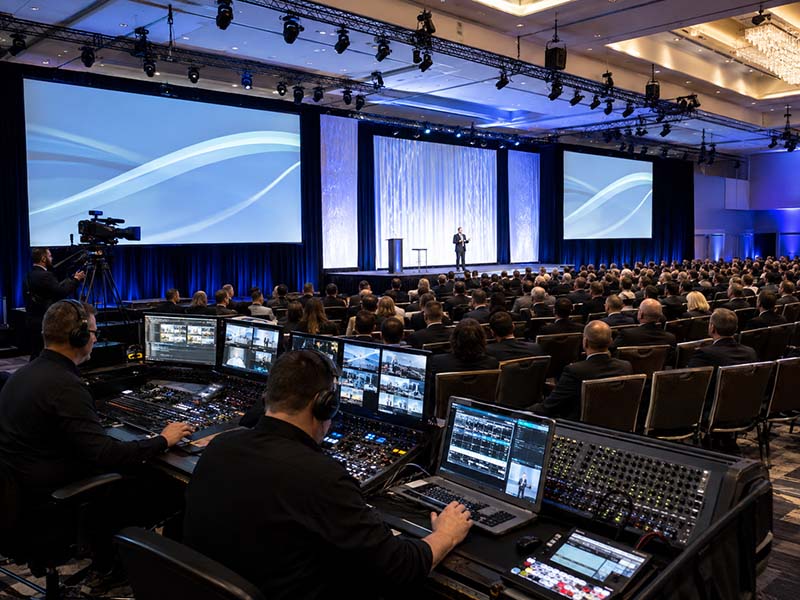
Audio technicians manage microphones and sound reinforcement. Video technicians operate presentation systems, cameras, playback equipment, and large displays. Lighting technicians create the appropriate look for speakers and stage elements. Technical directors coordinate cues and transitions throughout the program.
Presentation content must also be managed carefully.
Speakers may arrive with updated slides, embedded videos, unusual file formats, or last-minute changes. A professional presentation workflow helps ensure that content is tested before it reaches the main screens.
For more complex events, FDC’s Conference and Meeting Technical Support can help coordinate the equipment, staffing, and production requirements needed across general sessions and meeting spaces.
Breakout Room AV for Multi-Room Conferences
Breakout rooms may be smaller than the main conference space, but they can create just as many logistical challenges.
A conference may have several breakout sessions operating simultaneously, each with different speakers and technical needs.
Typical breakout room equipment can include:
Projector and screen
Large-format display
Presentation computer
Wireless microphone
Lectern microphone
Small sound system
Presentation remote
Confidence monitor
Video playback equipment
Some breakout sessions may also include panel discussions, remote presenters, recording, or livestreaming.
When possible, using standardized AV setups across similar rooms can make the conference easier to operate. Presenters moving between rooms encounter familiar equipment, while technicians can troubleshoot more quickly because the systems are consistent.
Presentation Management for Large Conferences
Managing presentation files becomes increasingly important as the number of speakers grows.
At a small meeting, allowing presenters to connect their own laptops may be manageable. At a large conference with dozens or hundreds of presentations, that approach can create delays and compatibility problems.
A presentation management system gives speakers a structured way to submit and test their files before their sessions.
Technicians can verify:
Slide formatting
Screen resolution
Videos
Audio playback
Fonts
Animations
Presenter notes
Aspect ratios
Once approved, presentation files can be delivered to the appropriate meeting room or general session system.
This process helps reduce awkward transitions between speakers and gives presenters time to resolve technical problems before they step on stage.
Stage Lighting and Scenic Elements
Lighting is another important part of conference AV production.
Professional stage lighting helps speakers remain clearly visible to both the audience and cameras. It can also create a more polished environment and reinforce event branding.
Lighting may include:
Speaker lighting
Stage washes
Accent lighting
Scenic lighting
Uplighting
Moving lights
Branded color treatments
Lighting becomes particularly important when sessions are being recorded or shown on large screens.
A stage that looks acceptable to the audience may appear dark or uneven on camera without proper lighting.
Lighting should therefore be planned alongside video production, stage design, and display placement.
Cameras and Live Video Production
Large conference spaces often benefit from live camera coverage.
Attendees seated near the back of a ballroom may have difficulty seeing facial expressions or details on stage. Cameras can provide close-up views of speakers and panelists that are displayed on large screens throughout the room.
Multi-camera production can also create a more engaging experience by switching between different views.
For example, one camera may capture a wide shot of the stage while another provides close-ups of individual speakers. During a panel discussion, cameras can switch between participants depending on who is speaking.
Conference video production may also be used for recording sessions, creating post-event content, livestreaming, or sharing presentations with attendees who were unable to attend in person.
Hybrid and Livestreaming Technology
Many conferences now include attendees or speakers who participate remotely.
Hybrid event technology can connect remote presenters to the physical conference while allowing online attendees to view sessions from another location.
This may require:
Cameras
Microphones
Video switching
Streaming encoders
Conferencing software
Dedicated computers
Reliable internet connectivity
Remote participant monitoring
Online presentation support
Hybrid events require careful audio planning because remote speakers need to hear the room without creating echo or feedback.
The online audience also needs a presentation designed for remote viewing rather than simply a camera pointed toward the stage.
The Importance of Onsite AV Technicians
Professional equipment is only part of a successful conference.
Technicians are responsible for setting up, testing, operating, and troubleshooting the AV systems throughout the event.
Before attendees arrive, the technical team can check microphones, video signals, lighting cues, presentation files, cameras, internet connections, and playback systems.
During the conference, technicians manage transitions and respond to changes.
A speaker may submit an updated presentation. A wireless microphone may need to be reassigned. A remote presenter could experience connection issues. The conference schedule might change unexpectedly.
Having experienced AV technicians onsite allows these situations to be addressed quickly without placing the responsibility on event planners or venue staff.
Coordinating AV Across the Entire Conference
The most effective conference AV systems are planned as one complete production rather than as separate pieces of equipment.
Audio affects video production. Stage design affects screen placement. Lighting affects camera quality. Breakout room schedules affect staffing. Presentation management affects every meeting space.
Coordinating these elements through one technical production plan helps reduce communication gaps and simplifies the planning process.
It also gives event organizers a single AV team that understands the overall conference rather than several vendors managing isolated pieces of the production.
Plan Your Conference AV with FDC Event Technology
Professional audio visual for conferences helps ensure that speakers can communicate clearly, attendees can see important content, and technical transitions happen without distracting from the event itself.
FDC Event Technology provides audio, video, lighting, staging, presentation management, livestreaming, equipment rental, and onsite technical support for corporate conferences, conventions, annual meetings, and other large events.
Whether you need AV support for a single general session or a complex multi-room conference, FDC can build a production plan around your venue, audience, schedule, and technical requirements.
Contact FDC Event Technology to discuss your upcoming conference and learn more about professional audio visual equipment and technical support for your event.